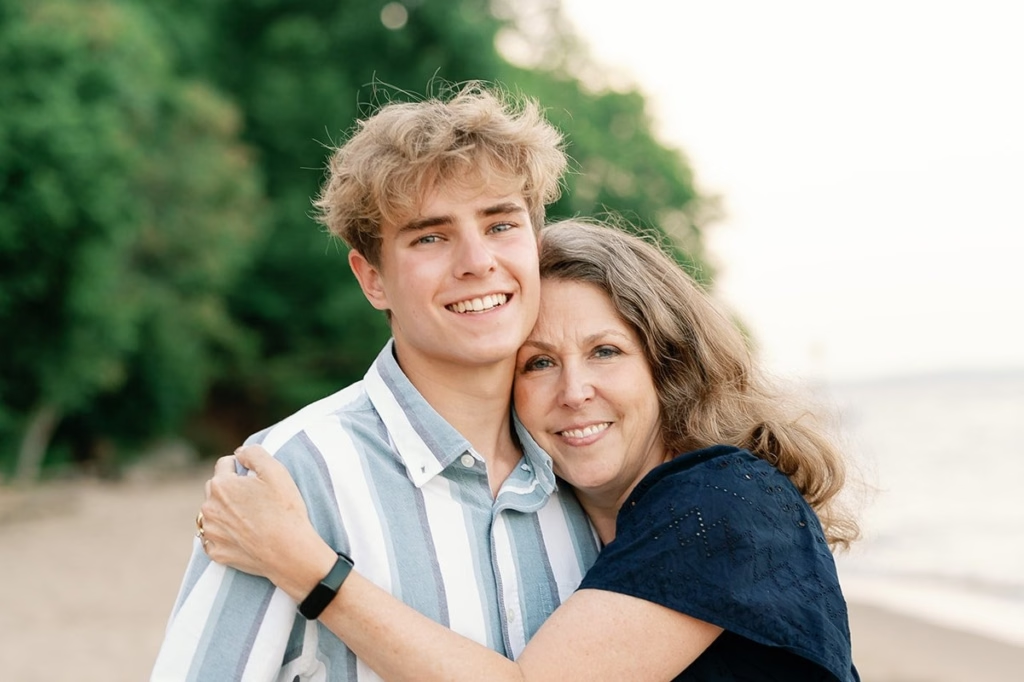
My husband and I dropped our son off at college last month. Our nest is officially empty. As we adjust to life without him, we are enjoying a different work schedule with more travel and time with family and friends.
We intentionally created a life with financial freedom by living below our means and owning less stuff. In the process, we set that example for our son. Throughout his childhood, we taught him three specific money lessons. And now, as a young adult, he talks about living debt-free and his desire to set financial goals for himself.
Here are three lessons that can significantly impact your child’s financial acumen in the transition to college.
1. We Did Not Buy Everything He Wanted
We taught our son the difference between wants and needs from an early age. This lesson was closely linked to the physical boundaries we set for how much stuff we own. Boundaries influence not only our physical space but our budget as well.
For example, he needed new clothing as he grew. But he did not need a new wardrobe at the beginning of every school year. We went through his closet twice a year to donate clothes. So we knew exactly what to buy. We had conversations about being content with what we already own. When it came to specific items he wanted but were outside our budget, he learned how to save money to purchase them himself.
We also discussed the trade-offs of one purchase for another. When he was young and saw a toy he wanted, I asked if he wanted the toy or a trip to the zoo, or an amusement park. Every time I asked the question, he chose the experience instead.
Research by Dr. Thomas Gilovich and Amit Kumar supports my son’s choice. “Experiential consumption was consistently associated with significantly greater happiness than either non-consumption or the consumption of material goods.” It also produce less clutter and an opportunity to connect with people. Even children can understand the difference.
As he prepared for life in a dorm room totaling 228 square feet of shared space, we took the long lists of recommended items and considered the practicality of each one. Some items were expensive but supported his health. Others were unnecessary and we could save money and space by not buying them.
And my son chose to spend some of his own money on items he really wanted. The end result was a minimalist yet comfortable dorm room of necessities. We sought to keep the small space as open and easy to care for as possible.
2. Give, Save And Spend
Give, save, and spend was the second key lesson. Once our son started receiving money for birthdays and holidays, we taught him to split it into three categories. Give 10%, save 40%, and spend 50%. For starters, it was a sneaky math lesson.
Practicing with smaller amounts of money made it simple for him to understand and easier to build the habit of giving and saving. We also knew that making mistakes with smaller amounts of money would lessen the likelihood of expensive mistakes when he was an adult.
3. Spend It On Paper First
When our son was 11 years old he wanted to build a gaming computer. He was so excited and compiled all the links to the various components. Before he started buying (or asking us to buy things), we asked him to write down every component and the cost. Then, we had him add the price of a few games he wanted to play.
The final tally was $1,300 and he was surprised. This is what it means to spend it on paper first. Now, we knew he could save birthday money, sell stuff, and rake leaves to earn the money. But by writing it down, the thought of spending $1,300 was painful. After some conversation with us, he opted for a $500 gaming system instead and started saving money in an envelope.
Another benefit of saving money and buying items for himself is that he takes very good care of them. I suggest having kids buy their own reusable water bottles if you’re looking for somewhere to start.
As parents, teaching our kids how to manage money is perhaps the single most important lesson we can share. Starting at an early age, we made this a part of everyday life. But it began with my husband and I having a desire to achieve financial freedom and own less stuff. And it’s never too late to start with your own children.
Leave a Reply